I’m excited to share a guest post today from two fellow Registered Dietitians. Read on for 5 tips to encourage your infant to eat vegetables, and great ways to serve vegetables to babies.
I can’t wait to try that recipe out on Riese – and tip #3 below, too!
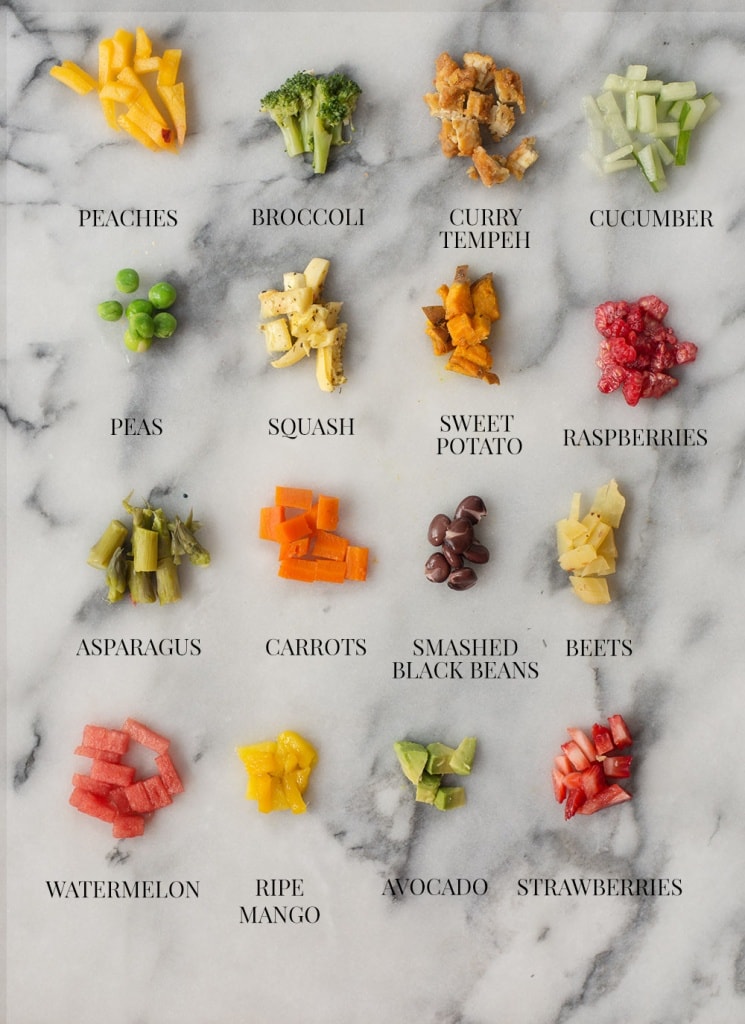
If you’re interested in learning more about baby led weaning, or looking for recipes or ways to encourage infants to eat more vegetables and plant-based foods, this post is for you!
 Please note there are affiliate links in this post.
 While there are a few advantages of offering solids right from the start, we think the biggest plus is increased acceptance of more interesting and varied flavors and textures since babies get to experience food in its natural state.
Think of your baby’s palate like a blank canvas, easily shaped by each new taste and experience. As dietitians and parents, we’re focused on shaping that palate to enjoy all foods, especially nutrient-rich foods like vegetables.
Therefore, whatever approach to feeding you take, we recommend adding vegetables at almost every meal.
Studies have shown that babies who eat a wide variety of vegetables during the first year of life go onto eat more vegetables than those that don’t. Sweet-tasting vegetables like carrots and sweet potatoes might be more accepted than bitter-tasting vegetables but that’s OK.
Continuing to offer vegetables in different ways helps improve acceptability.
Want more ideas?
While there are a few advantages of offering solids right from the start, we think the biggest plus is increased acceptance of more interesting and varied flavors and textures since babies get to experience food in its natural state.
Think of your baby’s palate like a blank canvas, easily shaped by each new taste and experience. As dietitians and parents, we’re focused on shaping that palate to enjoy all foods, especially nutrient-rich foods like vegetables.
Therefore, whatever approach to feeding you take, we recommend adding vegetables at almost every meal.
Studies have shown that babies who eat a wide variety of vegetables during the first year of life go onto eat more vegetables than those that don’t. Sweet-tasting vegetables like carrots and sweet potatoes might be more accepted than bitter-tasting vegetables but that’s OK.
Continuing to offer vegetables in different ways helps improve acceptability.
Want more ideas?

Want to save this post?
Enter your email below and get it sent straight to your inbox. Plus, I'll send you great content every week!
How to Encourage Babies to Eat More Vegetables
guest post by Whitney English Tabaie MS, RDN and Alexandra Caspero MA, RDN, Creators of Plant-Based Juniors
As new parents, we were only vaguely aware of the term “baby-led weaning” before we were thrusted into the new-mom community and saw many of our friends doing it. Isn’t that the funny thing about becoming a parent? Suddenly, the things you never knew you cared about become all you think about. AM feedings quickly become optimal research times, scrolling on our phone in the dark looking for answers to the day’s questions. (Related: check out my post about the best natural and organic personal care products to use for babies and toddlers, plus other Products I Recommend for New Babies + Expectant Mamas)Baby-Led Weaning
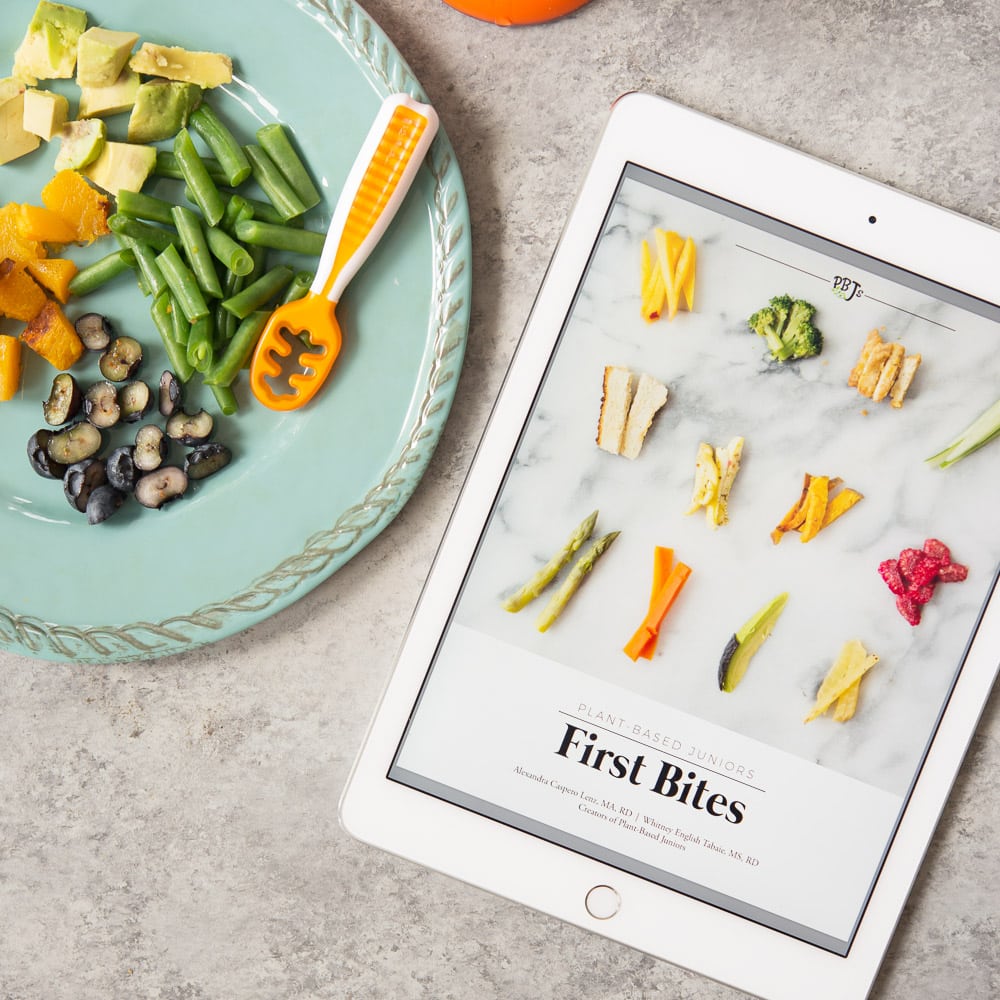
If you’re not sure what baby-led weaning means, let us explain. It’s essentially the concept of giving babies solid food right from the start–without the use of spoon-feeding purees. However, the term “weaning” can often be confusing. We aren’t weaning them off breast milk or formula as you’ll still want to offer that until at least the first birthday. Instead, it refers to gently weaning baby on to solid foods, allowing him time to explore various flavors and textures. In our new ebook, Plant-Based Juniors: First Bites, we outline everything you need to know about baby-led weaning, from how to start, troubleshooting, nutrition, meal prep, a grocery list and more. We also include 20 delicious plant-based, baby-led weaning recipes. (Interested? Use code ‘pbjpartner’ for 10% off your own copy.)
While there are a few advantages of offering solids right from the start, we think the biggest plus is increased acceptance of more interesting and varied flavors and textures since babies get to experience food in its natural state.
Think of your baby’s palate like a blank canvas, easily shaped by each new taste and experience. As dietitians and parents, we’re focused on shaping that palate to enjoy all foods, especially nutrient-rich foods like vegetables.
Therefore, whatever approach to feeding you take, we recommend adding vegetables at almost every meal.
Studies have shown that babies who eat a wide variety of vegetables during the first year of life go onto eat more vegetables than those that don’t. Sweet-tasting vegetables like carrots and sweet potatoes might be more accepted than bitter-tasting vegetables but that’s OK.
Continuing to offer vegetables in different ways helps improve acceptability.
Want more ideas?
Tips to get babies to eat more vegetables
-
Vary your own diet
-
Add spice to vegetables
-
Make superfood baby popsicles with vegetables
-
Offer your baby vegetables often
-
Try serving veggies in a dip